The Core Distinction: Origin, Not Appearance
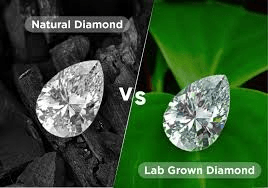
A lab grown diamond is chemically, physically, and optically identical to a natural diamond. Both are pure carbon arranged in a cubic crystal structure; both are graded by the same 4C framework; both are certified by GIA, IGI, or HRD. The only difference is origin — one formed over billions of years under the Earth's crust, the other grown in a controlled reactor environment over 6–12 weeks.
This distinction matters enormously for market positioning and resale value, but it is invisible to the eye and to most gemological instruments. Only advanced spectroscopy or specific fluorescence analysis can reliably separate natural from lab grown stones.
CVD vs HPHT: The Two Production Methods
Chemical Vapour Deposition (CVD) grows diamonds by introducing a carbon-rich gas mixture into a reactor chamber and depositing carbon atoms layer by layer onto a seed crystal. It produces high-quality, near-colourless to colourless stones efficiently. Surat has become a global CVD production hub, with Rachna Export operating a partnership facility in the city's SEZ.
High Pressure High Temperature (HPHT) mimics the natural formation process by subjecting a carbon source to extreme pressure and temperature. It is the older method and is still used for producing fancy colour lab grown diamonds, particularly yellows and blues, which are difficult to achieve consistently via CVD.
From a buyer's perspective, the production method matters less than the final grade and certification. Both CVD and HPHT stones receive identical GIA or IGI grading reports; the report notes the growth method for full transparency.
Price Trends: The 2020–2025 Divergence
Natural diamond prices softened moderately in 2022–2023 following post-pandemic normalisation but have largely stabilised, supported by constrained rough supply from De Beers and Alrosa. Rare sizes and colours have appreciated. The natural diamond market retains its value-store narrative for consumers and investors.
Lab grown diamond prices, conversely, have declined 60–80% since 2020 as production capacity scaled rapidly, particularly in India and China. A 1.00 ct D/VS1 CVD stone that retailed for $4,000 in 2021 now wholesales for under $400 in many markets. This price compression has reshaped the competitive landscape entirely.
The implication for B2B buyers is clear: lab grown diamonds are now a volume, margin, and accessibility play — not a value or investment product. Natural diamonds retain their position as aspirational, investment-grade goods. Sophisticated buyers stock both, targeting different customer segments with each.
Market Acceptance by Region
The United States is the world's largest consumer diamond market and has broadly accepted lab grown diamonds, particularly for bridal and fashion jewellery. Major retailers including Signet, Kay, and Zales carry extensive lab grown lines. However, the US luxury segment — $5,000+ engagement rings — still skews strongly toward natural diamonds.
The UAE and India remain traditional markets with strong cultural preference for natural diamonds, particularly for bridal jewellery. Lab grown adoption is growing in both markets, but primarily in the fashion and gifting segments. The Gulf's ultra-high-net-worth segment shows little interest in lab grown.
Belgium (Antwerp) and Hong Kong are trade hubs where both categories move in volume. Dealers in these markets are sophisticated and price-driven; lab grown stones are treated as a commodity, and buyers expect aggressive pricing accordingly.
Certification: What to Insist On
Insist on GIA or IGI certification for every natural diamond above 0.30 ct. GIA is the global gold standard and is required by most US and European retailers. IGI is widely accepted in Asia and for lab grown diamonds globally; IGI now grades more lab grown stones than any other lab.
For lab grown diamonds, IGI's dedicated lab grown reports (distinguished by an orange cover vs the blue natural report) are the trade standard. The report will specify growth method (CVD or HPHT), treatment status, and full 4C grade.
Rachna Export integrates both GIA and IGI certification into every parcel above 0.30 ct. We do not ship uncertified goods in mixed or matched parcels without explicit buyer agreement.