
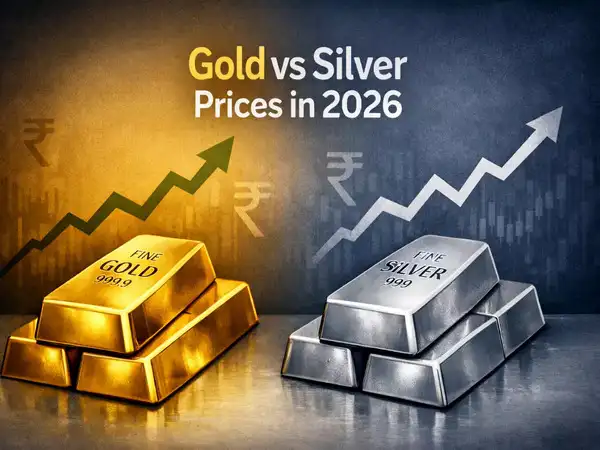
Macro-Economic Drivers in 2026
The global economic landscape in 2026 continues to be shaped by complex structural shifts, including shifting interest rate cycles, inflation stabilization efforts, and geopolitical realignments. In this environment, precious metals—specifically gold and silver—have firmly re-established their historical roles while taking on new significance in modern portfolios.
Central bank purchasing, particularly in emerging markets, has accelerated at an unprecedented rate, absorbing a significant portion of global mine output. This institutional buying provides a strong, inflexible price floor, insulating precious metals from traditional macroeconomic headwinds that would historically trigger sell-offs.
Gold's Unyielding Safe-Haven Status
Gold’s performance in 2026 underscores its reputation as the ultimate store of value. Unlike fiat currencies, which remain vulnerable to aggressive fiscal policies, gold has maintained its purchasing power. Institutional investors have strategically increased their exposure to gold, viewing it not merely as a hedge against inflation, but as a critical diversification asset in an increasingly multipolar financial system.
For wholesale jewelers and B2B buyers, this paradigm shift translates directly into a higher, more rigid baseline cost for raw materials. Sourcing strategies must adapt: rather than attempting to time long-term market reversals that may never materialize, successful operators are focusing on locking in prices during temporary, technical market dips.
Silver's Industrial Renaissance
While gold's trajectory is primarily driven by institutional investment, retail jewelry, and central bank demand, silver's narrative in 2026 is heavily dictated by the technology and green energy sectors. Silver is the most electrically conductive metal on Earth, making it irreplaceable in modern industrial applications.
The transition to renewable energy has supercharged silver demand. Solar photovoltaic (PV) cell manufacturing and electric vehicle (EV) electronics now consume vast and growing portions of the global silver supply. As global carbon-neutral mandates enforce the expansion of solar infrastructure, silver is experiencing a structural supply deficit.
This dual nature—acting simultaneously as a precious monetary metal and a critical industrial component—injects a higher degree of volatility into silver prices compared to gold. For bulk buyers, this volatility presents both substantial risks in inventory management and lucrative opportunities for tactical procurement.
The Gold-to-Silver Ratio: Decoding the Market Signal
The Gold-to-Silver ratio—the number of ounces of silver required to purchase one ounce of gold—remains a critical metric for commodity analysts. Historically hovering around 60:1, recent fluctuations have pushed the ratio to extremes, often signaling whether silver is undervalued relative to gold.
In 2026, we are witnessing a compression of this ratio as industrial demand forces silver to outperform gold on a percentage basis. Savvy B2B buyers monitor this ratio closely; a high ratio often triggers strategic silver accumulation, anticipating a mean reversion driven by physical supply constraints.
Strategic Procurement for B2B Buyers
Navigating the 2026 precious metals market requires a sophisticated approach to inventory and capital management. Wholesale buyers should utilize hedging strategies, such as forward contracts and options, to protect profit margins against sudden price spikes.
Furthermore, establishing robust, direct relationships with primary refiners and bullion banks is essential. As market liquidity tightens during periods of high demand, securing guaranteed allocation becomes more valuable than securing the absolute lowest spot price.
Rachna Export provides our partners with real-time market analytics, enabling data-driven procurement decisions. By leveraging our deep market liquidity and transparent pricing models, B2B buyers can confidently navigate the complexities of the 2026 gold and silver markets.